Creating Engineers: Ross Cameron

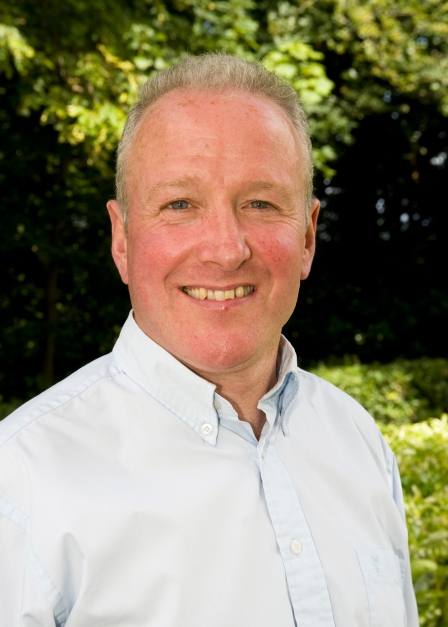
Since its inception over 15 years ago, Glasgow Science Festival’s Creating Engineers competition has engaged thousands of school pupils with engineering through hands-on classroom K’NEX challenges. In 2006, Ross Cameron was one such pupil. Now Ross is training to be an engineer and helping to inspire the next generation of engineers through his outreach activities as a STEM Ambassador. 
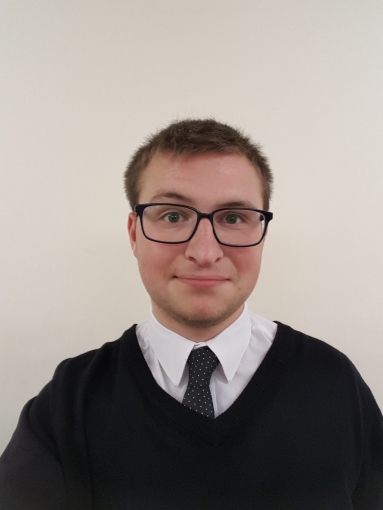
Ross

Who are you and what do you do?

My Name is Ross Cameron, I am 20 years old and currently work as a Structural Technician for a Civil Engineering Consultancy called Dougall Baillie Associates. I have just passed my first-year part time course at Glasgow Caledonian University for Environmental Civil Engineering and I am currently working towards my ENG Tech Institute of Civil Engineers membership.

What was your first experience of the Glasgow Science Festival Creating Engineers competition?

My first experience of the Glasgow Science Festival Creating Engineers Competition was the K’nex challenge in 2006 when I was at The Murray Primary school in P6. I have always loved building things from a very young age and when the challenge came to my school, I quickly partnered with my friend Wallace and we started playing with the K’nex. We won the class stage, the cluster stage at Claremont High School (which is now Calderglen High) and got to the regional finals. If I remember rightly the regional challenge was to build a windmill but alas we did not progress to the next stage. However just getting to that stage is an achievement in itself.

After that I was working away up until 5th & 6th of high school when I got involved in helping to run the class room & cluster stages of the K’nex Challenge at Calderglen High School. During my free periods I would spend the first hour of the school day once a week at The Murray Primary School to do the class room stage, then I helped out with the cluster stage at high school which was run by the Tech department at Calderglen High School.

What did you do when you finished school?

During my exams, I had been going to apprenticeship interviews with several IT companies e.g. Dell & IBM as I am very enthusiastic about computers, but had never taken IT at high school. However, I did take Advanced Graphic Communication gaining a qualification at B level. My friend, who had already been out of school for a year, was already working at Dougall Baillie Associates and called me to let me know that an apprenticeship opportunity was available and asked if I was interested. Up until that point I had never even considered Civil/Structural Engineering as an area of work to go for as I was too focused on my exams and interviews I had elsewhere. I emailed my CV to DBA though and was invited for an interview. I was then offered the apprenticeship at the end of my first interview at DBA, which was quite a surprise as every interview I had gone to before was always a ‘we’ll let you know’ at the end. I was quite taken aback that I had made such a good impression at interview to be handed the apprenticeship there and then.

What do you do now?

I am currently a fully qualified Structural Technician with two and a half years’ experience working full time at Dougall Baillie Associates and a Part Time student at Glasgow Caledonian University on the Environmental Civil Engineering Course. I am a STEM Ambassador and student member of the ICE currently working towards my ENG Tech ICE membership.

What made you get involved in the competition again as a judge? How was your experience?

I have been trying to be a pro-active STEM Ambassador for just over a year and unfortunately couldn’t commit as much time as I initially wanted to. But I knew that there was a lot of STEM events on in East Kilbride and it was just a case of making links. I emailed science Connects to let them know I had been involved in the K’nex challenge before and would be happy to help at any of the stages in the future. Donna then gave me the opportunity to be a judge at the Lanarkshire Regional Finals at the South Lanarkshire College which was something I wished to volunteer for.

Do you think that events like this are important? 

Absolutely yes, these events are important. Our current education system expects teenagers to know what they want to do at a very young age with next to no ‘life’ experience. The only way for students to know what they want to do is to experience things relating to particular areas of work. For example, the GSF Creating Engineers challenge for engineering/problem solving.

If you had any advice for young people wishing to pursue science or engineering as a career, what would it be?

My advice for young people wishing to pursue science or engineering as a career would be to say, if you can, go for an apprenticeship, work experience is more important and sought out more now especially in the engineering world. Getting paid to work & study is a pretty good deal, especially when you will have experienced colleagues to help you with your studies.

We wish Ross all the best with his outreach and engineering career! 
Glasgow Science Festival: TXTual Health?

How might texting help men reduce their binge drinking? How can social media improve sexual health among young people? How can webcam technology help parents bond with sick or premature babies admitted to special care baby units? These are some of the issues being explored at Glasgow Science Festival this year, with a special event led by Glasgow Caledonian University researchers. We chatted one of the researchers behind the event, Prof Lawrie Elliott.

Professor Lawrie Elliott

1. Who are you and what do you do?

I am Professor Lawrie Elliott. I evaluate public health interventions that aim to help people with alcohol, drug or sexual health problems.

Recent examples: a Parenting Intervention for Drug-Using Fathers (PUPs); an alcohol reduction programmes for older drinkers (Drink Wise Age Well); and a Digital Sexual Health intervention for secondary school pupils STASH).

2. What brings you to Glasgow Science Festival this year?

The opportunity to share our science with you.

3. Why should we come to your event?

Because public health is exciting and we want to hear what you think.

4. This year’s festival theme is ‘Glasgow Explores’. Where would you like to explore?

Your ideas to improve our research

5. What’s the best thing about being a scientist or engineer?

Doing stuff no-one has done before which makes a real difference to peoples’ lives.

Join Lawrie and colleagues on 12 June for ‘Can we harness the digital revolution to improve health in Scotland?’. This will take place at 6pm at Glasgow Caledonian University. Free but ticketed. For full details, visit the website.

Glasgow Science Festival: Exploring Human Health

Our ‘Glasgow Science Festival Explores @ Kelvingrove’ event will give people of all ages the chance to explore science through fun, hands-on activities in the museum. We spoke with Lucy, a PhD student at Glasgow Caledonian University, about her involvement.

KGrove Event

Lucy modelling a Glasgow Science Festival badge

1. Who are you and what do you do?

My name is Lucy and I’m a PhD student at GCU. My research focuses on issues related to infection prevention and control, such as antimicrobial resistance and hand hygiene.

 2. What brings you to Glasgow Science Festival this year?

With a team of researchers and PhD students in the same field, I’m very keen to communicate our research to wider audiences and to educate people about simple things they can do to protect themselves and others from developing infections.

 3. Why should we come to your event?

It is a family-friendly, entertaining and interesting event where everyone will have lots of fun! We will be delivering a range of hands-on activities. You will be able to test your own hand hygiene skills using an innovative hand scanner or see your hands ‘light up’ in our glow box. You will also have an opportunity to learn how we can preserve antibiotics for future generations and how you can protect yourself and your family from developing infections. And don’t forget to visit our photo booth for lots of amazing photos!

 4. This year’s festival theme is ‘Glasgow Explores’. Where would you like to explore?

The researchers from our team come from a range of disciplines, therefore our interests vary. For example, some of us would like to explore health-related issues, while others – human behaviour.

 5. What’s the best thing about being a scientist?

Being creative, and being able to contribute to tackling serious public health issues. It is also really exciting, because you can never be 100% sure about what you are going to find out!

‘Glasgow Science Festival Explores @ Kelvingrove’ takes place on 10 and 11 June in the Kelvingrove Art Gallery and Museum. The event is free and drop-in. For full details and times, visit the website.


Glasgow Science Festival: Superbug Science

Antibiotic resistance and the emergence of so-called ‘superbugs’ pose a growing threat to public health. But who is creating the problem? And whose responsibility is it? At this year’s Glasgow Science Festival, a team of researchers from Glasgow Caledonian University will shed light on this important issue through fun, interactive debate. 

SHIP Superbugs Debate (2)

1. Who are you and what do you do?

Mairi –  I’m a researcher at Glasgow Caledonian University (GCU) researching public awareness of antimicrobial resistance.

Caroline –  I’m also a researcher at GCU using social science to shine a light on complicated public health issues, like antibiotic use and resistance.

Jen –  I’m a researcher at GCU using psychological theory to understand behaviours, such as hand hygiene, which have an important role in tackling the issue of antimicrobial resistance.

Lauren –  I am also a PhD student at GCU, researching knowledge, beliefs and perceptions related to the acceptability of rapid diagnostics for antibiotic use and resistance.

Ellie –  I’m a PhD student at GCU, researching public knowledge, attitudes and behaviours around antibiotic use and resistance.

2. What brings you to Glasgow Science Festival this year?

Mairi –  I’m keen to engage with people from all different backgrounds, and raise their awareness to the issue of superbugs’ resistance to antibiotics.

Caroline –  I’m really excited to work with a great team of social scientists to share our research findings about antibiotic use and resistance, a topic which is relevant to us all.

Jen –  Glasgow Science Festival is a unique opportunity for us to spread the word about our research to a different audience and engage with members of the public around the issue of antimicrobial resistance.

Lauren –  I think the festival will be a perfect opportunity to engage with the wider community. AMR (antimicrobial resistance) affects everyone and it is so exciting to be able to share our research with the public.

Ellie –  I believe many health issues can be targeted by educating the public and raising their awareness of what can happen when certain behaviours and habits persist. Taking part in an event such as this means I get to play an active role in enhancing the public’s awareness, younger individuals and families.

3. Why should we come to your event?

Mairi –  We’re focusing on a serious public health issue, but doing so in an interactive and light-hearted way. This event will give you the chance to understand how superbugs are becoming resistant to antibiotics, and what role we all play in safeguarding antibiotics for the future.

Caroline –  The ‘Superbugs’ debate is going to be a great fun event. There’ll be a chance to hear lots of different perspectives on AMR (e.g. health, pharmaceutical, agricultural). You’ll then be given the chance to make up your own mind about AMR and what can be done – and to vote to let us know!

Lauren –  The event will be a fantastic opportunity to hear different views on a global health problem. The night will be fun and interactive but will also offer you the chance to have your say! Hope to see you there!

Ellie –  When people think about the issue of antimicrobial resistance, they seem to only look at it from the point of views of human health. However, there are many other processes in a variety of areas which contribute to this issue, such as agriculture and farming. Our event will bring all of these factors together in a fun way through role-play and public involvement in a lively debate.

4. This year’s festival theme is ‘Glasgow Explores’. Where would you like to explore?

Mairi –  Human reasoning (on a sub-conscious and conscious level) and how it leads to behaviour.

Caroline – I’d like to explore what solutions we create when the great minds of Glasgow and beyond come together to creatively engage with a problem like AMR!

Jen –  I’d like to explore what members of the public know about the issue of antimicrobial resistance and discuss the ways in which we all can make small changes to our behaviour to safeguard antibiotics for the future.

Lauren –  In my own research, I am hoping to find acceptable ways to reduce the AMR crisis and I cannot wait to hear what people have to say about AMR.

Ellie –  I’d love to explore how cultural norms affect the way people think about certain health issues, and how this then translates into behaviour.

5. What’s the best thing about being a scientist?

Mairi –  Contributing to tackling serious public health issues, and the creativity that comes with the research.

Caroline –  Like Mairi, I love the creativity involved in being a social scientist – the chance to explore, think about and impact upon public health problems is a real privilege.

Jen –  Learning about and exploring aspects of human behaviour related to health and working as part of a wider team to help people change their health behaviours, in turn, contributing to important public health issues, such as antimicrobial resistance.

Lauren –  The best thing for me would have to be discovering new things every day. Research lets you answer the tough questions and helps to reduce burden from health crisis’ such as AMR.  

Ellie –  This is quite a tough question because I pretty much love everything about it- from learning about what has been done, to taking that information and using it to find out more about the subject. There’s variation because your data leads you in many different directions too, and I think that is very exciting!

Join Mairi, Caroline, Jen, Lauren and Ellie for ‘Whose Superbug Crisis Is It Anyway?’ on Thursday 8 June at Glasgow Caledonian University. The free event begins at 6pm. For full details and booking, visit the website.

Glasgow Science Festival: Inside Out Science

New for Glasgow Science Festival this year is ‘Inside Out Science’, a fun, free family event at the University of the West of Scotland. We spoke to Fiona Menzies for a flavour of what’s in store.

UWS portrait

1. Who are you and what do you do?

My name is Fiona Menzies and I am a Lecturer in Immunology in the School of Science and Sport at the University of the West of Scotland (UWS).

2. What brings you to Glasgow Science Festival this year?

Our School does lots of exciting research in lots of different scientific areas, including biomedical sciences, environmental science, geology, chemistry, forensic science, mathematics and sport science, to name a few.  We thought the Glasgow Science Festival theme of “Glasgow Explores” was very fitting for us, because we explore every aspect of life, from our molecules, to our bodies to the world around us.

3. Why should we come to your event?

We have 26 different activity stalls, designed to be fun and informative for the whole family. Our whole School is behind this event, getting involved, and we are really excited to be hosting this.

4. This year’s festival theme is ‘Glasgow Explores’. Where would you like to explore?

My own research is in reproductive immunology and for me there are still some fundamental gaps in our knowledge about how our immune systems respond to hormones and pregnancy as well as different types of infection.  At present my research is exploring how a parasite, called Toxoplasma gondii, can interact with the placenta.

5. What’s the best thing about being a scientist or engineer?

No two days are ever the same, and you get to do a job where you feel you are contributing something to someone – whether it be improving someone’s life, environment, teaching someone, or adding to knowledge to your field that can be used by the next generation.

Join Fiona and friends at UWS on 8 June for ‘Inside Out Science’ from 5-7pm. Free but ticketed. For full details and booking, visit the website.


Glasgow Science Festival: Fun with Zines

This summer, scientists from across the globe are meeting in Glasgow to discuss one of the biggest challenges of modern times: Climate Change. Among them is Melanie Boeckmann, whose climate change workshop for students will blend creativity with science. She chatted more about what’s in store…

Portrait

1. Who are you and what do you do?

My name’s Melanie Boeckmann and I am a postdoc in Public Health at the Medical Faculty of the Heinrich-Heine-University in Duesseldorf, Germany. I now research ways to encourage patients to stop smoking in a project with partners in Bangladesh, Nepal and Pakistan. And before that I did my PhD and first postdoc on climate change and health.

2. What brings you to Glasgow Science Festival this year?

I’m excited to be here for the first time and to offer a zine workshop for university students. Zines are independently created little magazines that can be about a million different topics.

3. Why should we come to your event?

You get to draw and write and cut and paste and fold and print and talk all at the same time! Zines are a cool medium to use to express your ideas, and you get to choose whether you want to write about science with a poem, paint your favorite images, or wow us with your rendering of facts in your science magazine. Plus you get to take something physical home with you at the end of the session,

4. This year’s festival theme is ‘Glasgow Explores’. Where would you like to explore?

The question really should be: where wouldn’t I like to explore? But since I’ll be in Scotland for the third time in my life I’ll be looking for little hole-in-the-wall cafés and small bookstores rather than the big sights this time. And I’ll never NOT want to explore places near an ocean.

5. What’s the best thing about being a scientist or engineer?

The best thing about being a researcher is making time to sit and think and then writing some of that thinking down.

Calling all students! Join Melanie for her Climate Change Zine workshop on 8 June. Tickets are free and can be booked online.

Glasgow Science Festival: Exploring Engineering

At this year’s Glasgow Science Festival, we are delighted to welcome a new event from the University of the West of Scotland that will engage the next generation of engineers with cutting-edge research. We chatted to the project lead, Patricia Muñoz-Escalona.

FFTF PICTURE

1. Who are you and what do you do?

I am Patricia Muñoz-Escalona, I am a Materials Engineer with a PhD In manufacturing engineering. I am a lecturer in the University of The West of Scotland and I teach students materials properties, product design, and manufacturing processes. How to select the right material for the right job!

2. What brings you to Glasgow Science Festival this year?

This year the University of the West of Scotland will be hosting the Glasgow Science Festival. We want to share with pupils are knowledge in STEM areas. We want everyone attending the event to enjoy a day full of knowledge, while they learn about the research we conduct here in UWS.

3. Why should we come to your event?

We have prepared a variety of workshops from engineering, computing , science and technology. We’ll have a good overview of the latest technologies that have been developed/applied. Pupils can enjoy the beauty of learning and expanding our knowledge. Attendance at our workshop could be the start of what pupils want to do or be in the future.

4. This year’s festival theme is ‘Glasgow Explores’. Where would you like to explore?

I would like to explore in gravitational waves. Move from wave to wave to see the beauty of the Universe, what is missing and what I can do to make it better!

5. What’s the best thing about being a scientist or engineer?

As a scientist or as an engineer you are always trying to improve people’s lives. You research for this purpose!. You learn and improve every day. You share and transfer knowledge. I enjoy doing STEM outreach activities to primary school students. Young people have loads of creativity and there is loads that I can learn from them.

There are still some places for ‘Engineering & Computing in the 21st Century’ on 14 June. Tickets are free but for SCHOOLS ONLY, S4-S6. For booking and details, visit the website.

Glasgow Science Festival: The Wonders of Perception

After successful events in 2015 and 2016, philosophers from the University of Glasgow are set to bring more thought-provoking activities and illusions to Glasgow Science Festival this year. We chatted to Dr Jennifer Corns about what’s in store.

self

1. Who are you and what do you do?

My name is Dr Jennifer Corns and I am a philosopher at the University of Glasgow.

2. What brings you to Glasgow Science Festival this year?

I am part of a team from the Centre for the Study of Perceptual Experience who will be hosting an interactive station on the Wonders of Perception.

3. Why should we come to your event?

Perception is amazing! At our interactive event, you can undergo hallucinations and illusions to learn more about the wonders of the mind and the way that you perceive the world around you. Experts on the nature of perceptual experience will be on hand to chat with you and answers questions about the mysteries of your mind.

4. This year’s festival theme is ‘Glasgow Explores’. Where would you like to explore?

I love to travel and am most keen to explore more of Asia.

5. What’s the best thing about being a philosopher?

As a philosopher, I get to interact with science, engineering, and other areas to ask deep questions about what they do, why they’re valuable, and how they are useful. The best thing about being a philosopher is asking questions!

Join Jennifer for the Wonders of Perception at Science Sunday on Sunday 18 June at the University of Glasgow. The event is free and drop-in. Full details on the website.

Glasgow Science Festival: Bee the Change

Glasgow Science Festival creates a space where the public can learn about current issues in science and society, from health and well-being to the environment. We spoke to three PhD students who are shedding a light on the growing threats to our bee populations.

garden

1. Who are you and what do you do?

Kirstin – I’m Kirstin, a first-year PhD student in public health. I’ll be using big data to explore patient adherence to cardiovascular medications, or more simply, looking to see if people are picking up their drugs to keep their heart healthy. It’s an important area of research because unfortunately, we have a lot of heart disease in the West of Scotland!

Fernanda – I am an animal and plant lover that used to grow tadpoles in my fancy Barbie’s whirlpool and pool. My interest for living beings and their development inspired me to pursue a career on biological sciences. Later, I felt a lot of curiosity for those microscopic beings we cannot see but can exterminate the whole of humanity. For this reason, I specialised in cellular and molecular parasitology, which is the study of parasites that cause diseases. Currently, I am finishing my PhD thesis which was focused on reassessing the ability of a parasite, called Toxoplasma gondii, to move and invade human cells. Since then, I have converted in a micro-photographer and micro-movie maker. I have spent plenty of hours on different microscopes studying the way parasites move and penetrate human cells in the absence of very important components of the parasite “micro engine” .

Lynne – I work in Public Health Medicine and am in my second year of a PhD.  I’m interested in how public health threats are reported in the media and how this impacts on public perceptions of risks to their own health.  I’m particularly interested in what the public thinks about the health risks associated with antibiotic resistance.

2. Have you done public engagement before? What made you want to get involved?

Kirstin – I wanted to get involved because public engagement is so important to big data research. People find it a scary concept and I know in my career going forward I need to help people understand why I do what I do and how we keep patient data safe, otherwise they might not trust the research we are doing. Although our activity isn’t informing people about big data, I thought Glasgow Science Festival would be a fun way to get involved with public engagement and build my confidence for future outreach projects.

Fernanda – I’m lucky to have been involved in several ‘Crafty Critters’ events. This project, developed by  students at the University of Glasgow,  aims to teach the general public what different parasites look like and how they function. I had the opportunity to interact with lots of people of different ages. Their comments and questions made me realise the importance of communicating relevant/accurate information to others in a friendly and informal manner. For this reason, I thought that the Glasgow Science Festival was not only an opportunity to project my own ideas, but also to interact with other fellow students similarly interested in passing the voice of science to the general public.

Lynne – I’ve had plenty of experience with working with the public as a doctor but not of sharing scientific research.  That’s a whole different ball game!  To generate interest, an activity has to be fun but also to be relevant to the audience, and hopefully show them how they can make a difference.  Antibiotic resistance is such an important issue and I think we can communicate it more effectively – I hope I will be able to use some of the skills I learn by being involved in the Glasgow Science Festival to develop some public engagement activities around my own research area. Plus, you get to wear a bee costume!

3. Describe your activity to us. Why should we come along?

The importance of hives and individual bees has been remarkably understated over the years. These insects are gardeners, farmers, landscapers, and honey chefs of nature, but sadly their populations are rapidly declining and dangerously disappearing. Our activity  is focused in three different points: 1. Why bees are important 2. Why they are disappearing and 3. How we can help.

Our activity allows you to ‘Bee the Change’. Here, kids (or adults!) get to dress up as queen bees, and carry a hive while tackling our obstacle course. The aim is to rescue as many bees from your colony as possible before time runs out. At the end of the trail, you get a small bee-friendly gift for helping bees, taking the message home and spreading the information as much as possible.

4. This year’s festival theme is ‘Glasgow Explores’. Where would you like to explore?

Kirstin – I think it would be amazing to go to Iceland. I loved geography at school and it would be really cool to see a real glacier, climb a volcano, and see the Northern Lights. I’m also a big food fan so I’d love to travel to the Far East and explore some authentic cuisines!

Fernanda  If I had the chance I would love to explore the deepest and darkest environments of the sea even if my mom won’t let me go. What’s most interesting to me is the capacity of all beings in there to adapt to such a habitat. The anatomy of these organisms is extremely specialised for high pressure, darkness, and cold temperatures. Interestingly, these important environmental characteristics drove them to develop senses and biological features opposite to all the other living beings that inhabit the surface. Go team abyss!

Lynne – I have always wanted to explore the breath-taking scenery of the Rocky Mountains in Canada.  I’m more interested in photography than climbing so I would probably prefer to do this by train! There are also lots of beautiful parts of the Scottish highlands and islands that I have yet to explore.

 5. What’s the best thing about being a scientist or engineer?

Kirstin – I love being part of the scientific community. Now that I’m in public health I don’t get to spend time in the lab anymore, but I still get to do research that could genuinely benefit people and I find that really exciting. I was at a health informatics conference recently and it was fascinating to see what you can explore with big data; it’s a great time to be working in such a dynamic field.

Fernanda – The best bit about being a scientist is keeping alive the girl that grew tadpoles in a toy pool; I know that conditions have changed a lot, but the principle is the same. We do things for passion, vocation, knowledge and somehow, improve the living  quality of others. We all have projects directed to think outside the box and progress by updating information. Interestingly, this is the way to march forward as humanity and as professionals. In the same sense, in the same way.

Lynne – I am increasingly interested in behavioural science.  In order to improve health, we need to know the science behind disease and prevention, but we also need to understand what it is that determines whether people are able to make necessary changes to the way they live.  To make a difference to people’s lives we need all branches of science working together.

Join Kirstin, Fernanda and Lynne for ‘Bee the Change’ at Science Sunday on Sunday 18 June. Free, drop-in. Full details on the website.

Glasgow Science Festival: Wizard Science

At this year’s Glasgow Science Festival, the ‘Harry Potter and the Garden of Secrets‘ will invite the public to engage with science in a truly unique way. Supported by RCUK, the event will give muggles the chance to explore chemistry, genetics and other science subjects through wizard experiments in The Concrete Garden, Possilpark. We chatted to three University of Glasgow PhD students about what they have in store…

hagrids1. Who are you and what do you do?

Sarah – I worked as a vet for ten years before coming to Glasgow Veterinary School to do a PhD. I am researching the causes of a type of skin cancer (sarcoids) in donkeys. I am also trying to find a way of telling the difference between tumours that will respond well or badly to treatment.

Amelia – I am in the third year of my PhD in Biochemistry at the University of Glasgow where I research how our cells’ powerhouses, mitochondria, respond to stress. I have an undergraduate MSci in Genetics also from the University of Glasgow and in my spare time I like to compete in triathlons around Scotland.

Tolu – After a first and second degree in my country Nigeria, I started my PhD in Human Molecular Genetics here at the University of Glasgow and I am now in my final year of study. My research focuses on developing new methods for screening human populations for rare genetic (heritable) diseases that affect the nervous system.

2. Have you done public engagement before? What made you want to get involved?

Sarah – Whilst working as a vet I dealt with the public daily; I enjoyed thinking of ways to explain complicated diseases and treatments. We also ran client evenings at the practice to give people the latest information on managing their animals. Since joining the University of Glasgow I have taken part in workshops teaching primary school children about parasites – I like helping people understand topics that are unfamiliar to them.

Amelia – Yes, I have done various public engagement activities before including giving a talk and running an activity at Explorathon 2015 and 2016, Glasgow Science Centre European Researcher’s night. I have also helped run activities at science festivals organised by the Royal Society of Biology and also with primary school kids on visits to the University of Glasgow. I like to get involved because I believe it’s incredibly important to enthuse young people about science and also to showcase research to the general public.

Tolu –  Yes. I have participated in quite a number of public engagement events: one of which involved meeting with people affected (and their families) by the rare genetic disease, myotonic dystrophy.

I like helping people affected with rare genetic diseases to understand how their body works with the aim of getting them to make the most out of their condition and to prevent future occurrence in their family lineage.

 3. Describe your activity to us. Why should we come along?

Our activity is centred on the fact that we inherit many characteristics from our parents, but which we get is down to chance. Come along to see what sort of baby dragon you’ll get from the parents we’ve chosen!

4. This year’s festival theme is ‘Glasgow Explores’. Where would you like to explore?

Sarah – Having only moved to Glasgow in November I’m very much enjoying exploring this area. I love hiking so I’m keen to explore more Munros, Scotland is a beautiful place!

Amelia – As I enjoy long bike rides I would like to explore all of Scotland’s many cycle routes and spend more time exploring the countryside.

Tolu – Having lived all my life in an entirely different and far-away part of the world, I’d like to explore Scotland’s museums and sites of cultural heritage and history.

5. What’s the best thing about being a scientist or engineer?

Sarah – The world of animals and biology contains such amazingly interesting things, I could never get bored of learning about them.

Amelia – Investigating the unknown.

Tolu – Solving problems, preventing them from happening.

Sarah, Amelia and Tolu will bring baby dragon genetics fun to the Concrete Garden on Saturday 17 June. The event is now sold out. Some tickets remain, however, for our morning screening of ‘Harry Potter and the Prisoner of Azkaban’. For more details, visit the website.